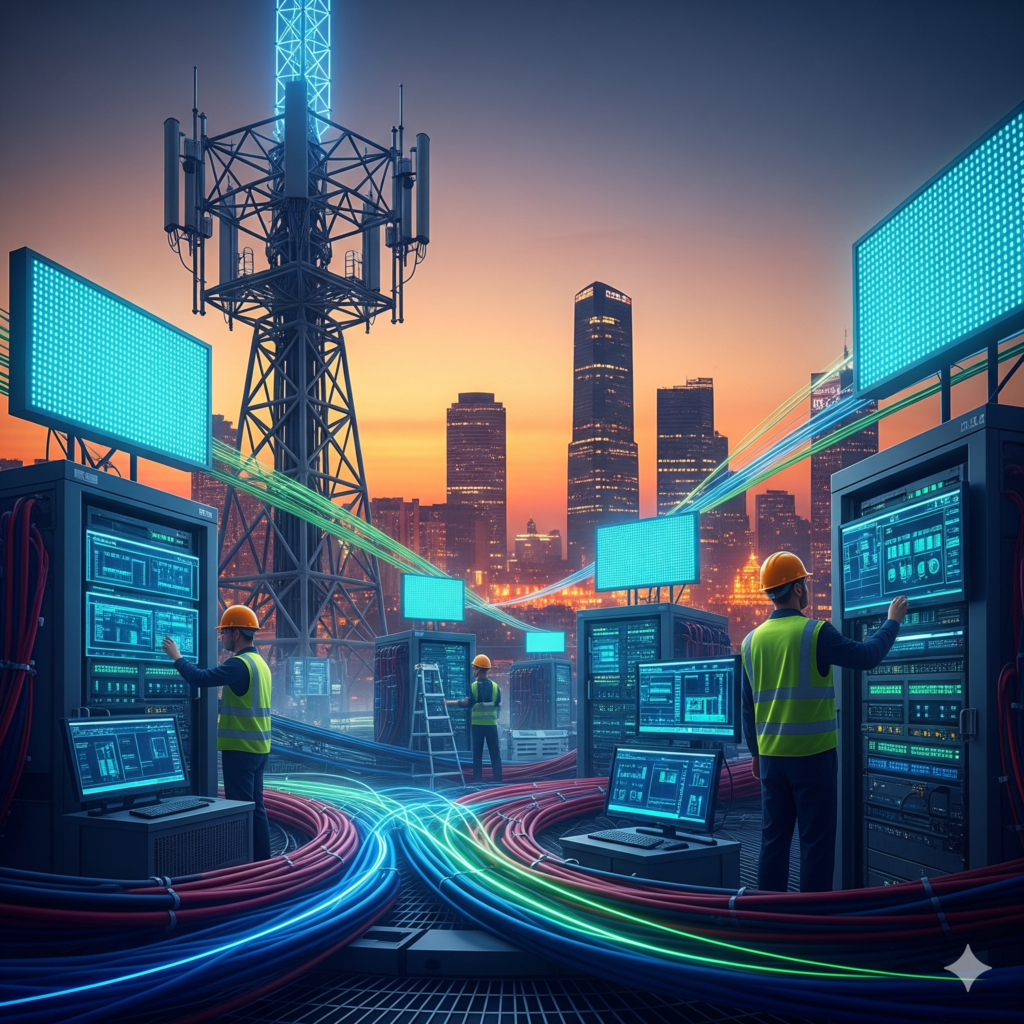
Telecommunication refers to the process of sending information from one place to another using electronic devices.This information can be voice (phone calls),text (SMS,email),image (photos,videos) or data (internet,files).The word telecommunication is made up to two parts -“tele” meaning far and “communication ” meaning to exchange information.
Why is Telecommunication Important?
Telecommunication plays a huge role in our daily life. Without it, the modern world would stop working.
- Helps people talk from far away
- Supports online education and learning
- Makes business faster and easier
- Helps doctors treat patients remotely
- Connects countries and cultures
- Supports emergency services
Imagine life without phones or the internet—it would be very slow and difficult.
Read all the blogs from the website:
Internet vs WiFi: The Misunderstanding That Causes So Much Trouble!
How to Make Delicious Momos at Home
Jerry (2014) – An Unforgettable Journey of Love, Youth, and Self-Discovery
A Short History of Telecommunication
Telecommunication did not start with smartphones. It grew step by step.
Early Communication
- Smoke signals
- Drums and horns
- Letters carried by people or animals
Modern Telecommunication
- Telegraph (sending coded messages)
- Telephone (voice communication)
- Radio and television
- Mobile phones
- Internet and satellites
Each new invention made communication faster and better.
How Does It Work?
It works in three simple steps:
- Sender – A person or device sends information
- Medium – The information travels through cables, air, or space
- Receiver – Another person or device receives the information
Example
- You send a WhatsApp message (sender)
- The message travels through the internet (medium)
- Your friend receives it on their phone (receiver)
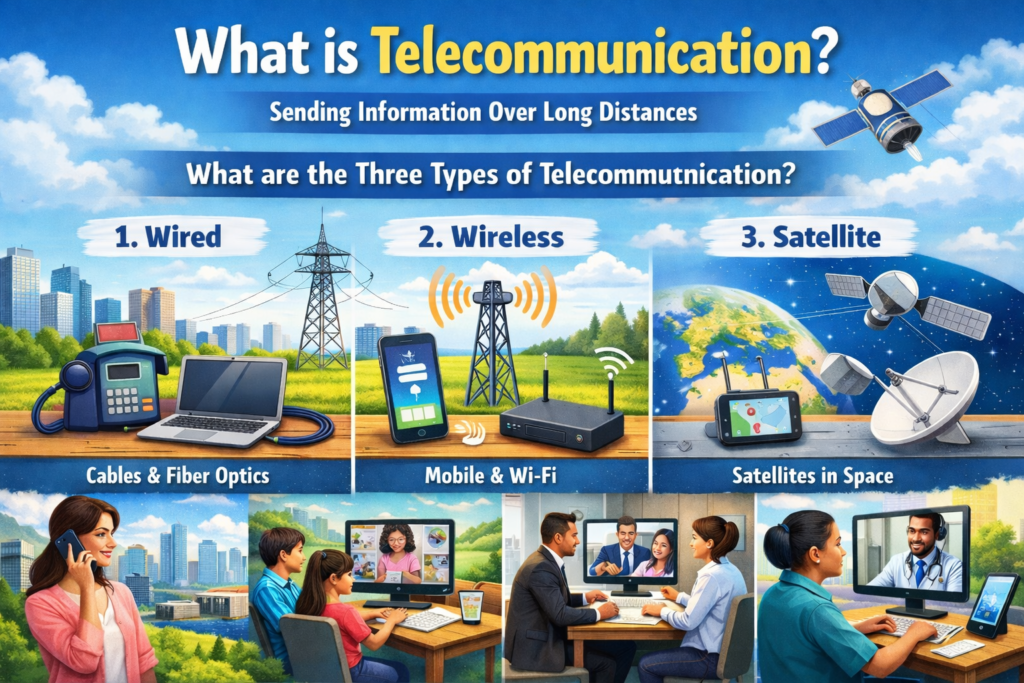
What are the three types of telecommunication?
There are three main types of telecommunication, explained in very simple terms below.
1. Wired Telecommunication
Wired telecommunication uses physical cables or wires to send information.
Examples
- Landline telephone
- Internet through fiber cables
- Cable television (TV)
How It Works
Information travels through copper wires or fiber-optic cables from one place to another.
Advantages
- Strong and stable connection
- High speed (especially fiber internet)
- Less affected by weather
Disadvantages
- Needs physical cables
- Difficult in remote areas
- Expensive to install
2. Wireless Telecommunication
Wireless telecommunication sends information without using wires.
It uses radio waves.
Examples
- Mobile phones
- WiFi
- Bluetooth
- Radio
- Television broadcasting
How It Works
Signals travel through the air using towers or routers.
Advantages
- Easy to use
- Portable
- Works in many places
Disadvantages
- Signal can be weak
- Affected by weather or obstacles
- Security risks if not protected
Most people today use wireless telecommunication every day.
3. Satellite
Satellite telecommunication uses satellites in space to send and receive information.
Examples
- Satellite TV
- GPS
- International phone calls
- Internet in remote areas
How It Works
- Signals are sent from Earth to a satellite
- The satellite sends them back to another place on Earth
Advantages
- Covers large areas
- Works in mountains, oceans, and villages
- Useful during disasters
Disadvantages
- Expensive
- Slight delay in communication
- Needs clear weather
Three Types of Telecommunication
| Type | Uses Wires? | Common Examples |
|---|---|---|
| Wired | Yes | Landline, fiber internet |
| Wireless | No | Mobile, WiFi, radio |
| Satellite | No | GPS, satellite TV |
Devices We Use Daily
Telecommunication is everywhere around us.
Common Devices
- Mobile phones
- Computers
- Tablets
- Routers
- Radios
- Televisions
Each device helps us send or receive information.
Telecommunication and the Internet
Many people think the internet and telecommunication are the same—but they are not.
- Telecommunication is the system of communication
- Internet is a service that uses telecommunication
The internet works because of telecommunication networks.
Role of Telecommunication in Education
Telecommunication has changed how students learn.
Benefits
- Online classes
- Educational videos
- Virtual classrooms
- Learning from home
Students can now study anytime and anywhere.
Role of Telecommunication in Business
Businesses depend on telecommunication.
How Businesses Use It
- Video meetings
- Emails and calls
- Online marketing
- Customer support
Without telecommunication, global business would not be possible.
Future of Telecommunication
The future of telecommunication is very exciting.
Upcoming Technologies
- 5G and 6G networks
- Faster internet
- Smart cities
- Internet of Things (IoT)
Communication will become faster, smarter, and safer.
Advantages of Telecommunication
- Saves time
- Connects people worldwide
- Improves education
- Supports healthcare
- Boosts economy
Disadvantages of Telecommunication
- Overuse of mobile phones
- Privacy risks
- Addiction to screens
- Network problems
Using telecommunication wisely is very important.
What is vpn? what is the use for?
A VPN helps protect your online activity by hiding your real internet address (IP address). When you use this VPN, your internet connection becomes private and secure.
What is Telecommunication?
To sum up:
- What is Telecommunication?
It is the process of sending information over long distances using electronic systems. - What are the three types of telecommunication?
- Wired
- Wireless
- Satellite
Telecommunication connects the world and makes life easier. From a simple phone call to global video meetings, it plays a powerful role in our daily lives.